Design Thinking for Innovation: From Ideas to Impact
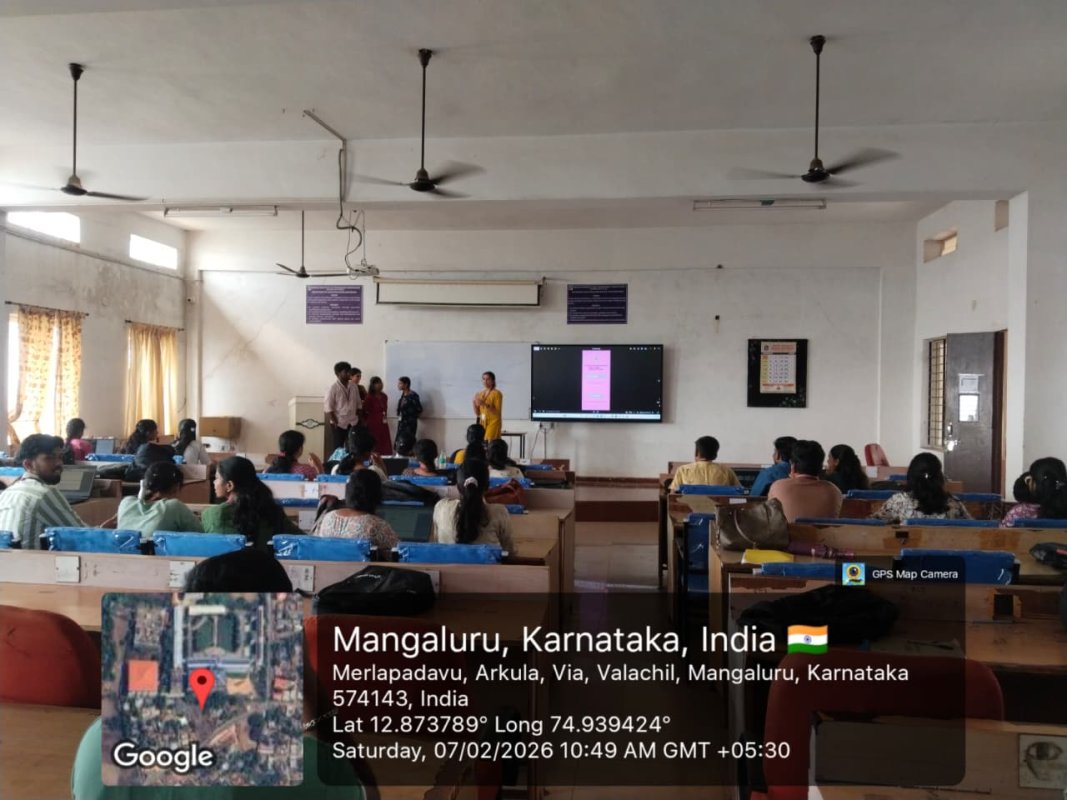
On February 07, 2026, the Department of Information Science and Engineering (ISE) and the Department of Computer Science and Design (CSD), in association with the Institute Innovation Cell (IIC), organized a design thinking based innovation activity titled “Design Thinking for Innovation: From Ideas to Impact” for the students of ISE and CSD. The program aimed to nurture creativity, user-centric problem solving, and innovative thinking among students through a structured, hands-on design thinking approach.
The activity was organized around a systematic execution flow that guided students from problem identification to solution presentation. Students began by engaging in Problem Mapping, where they explored real-world challenges across selected domains and identified meaningful problem statements. This phase encouraged analytical thinking and helped students clearly define the context and scope of the problems to be addressed.
Subsequently, students worked on Persona Creation and Empathy Mapping, enabling them to understand end-user needs, pain points, and expectations. This stage emphasized the importance of human-centered design and allowed students to view problems from the users’ perspectives, ensuring that proposed solutions were relevant and impactful.
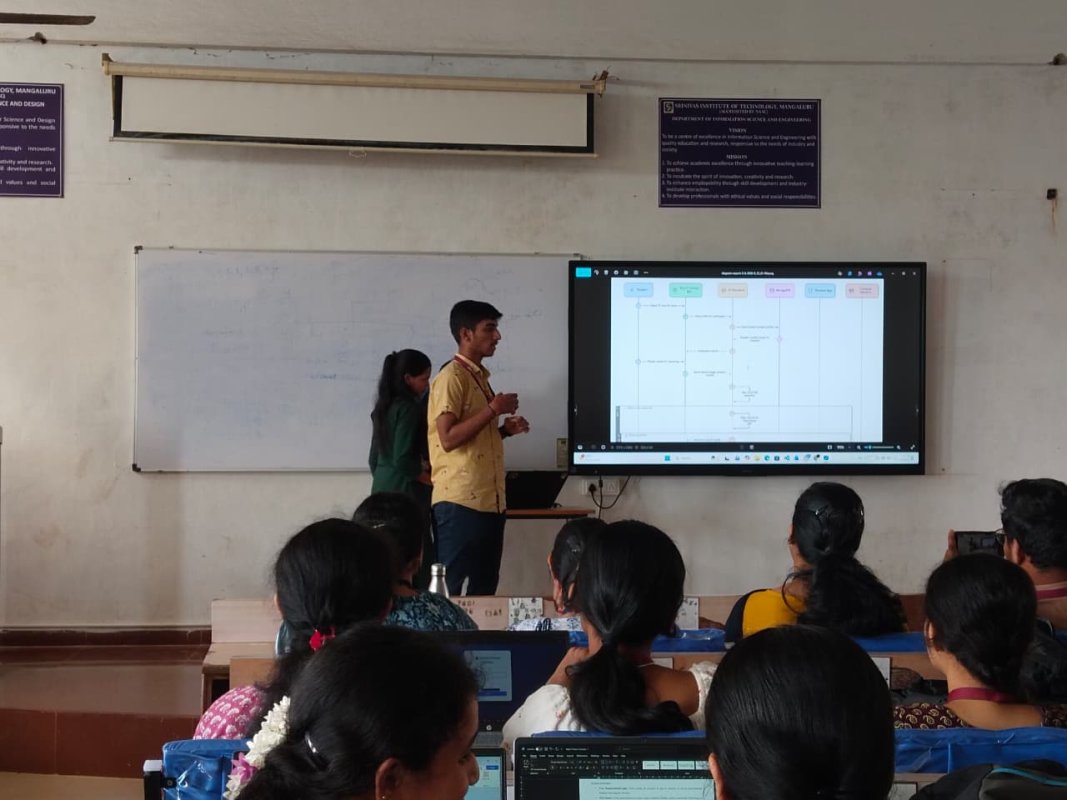
The next phase involved UI Sketching and System Flow Design, during which students translated their ideas into visual representations. Teams developed interface sketches and outlined system workflows, helping them conceptualize functional solutions and understand the interaction between various system components.
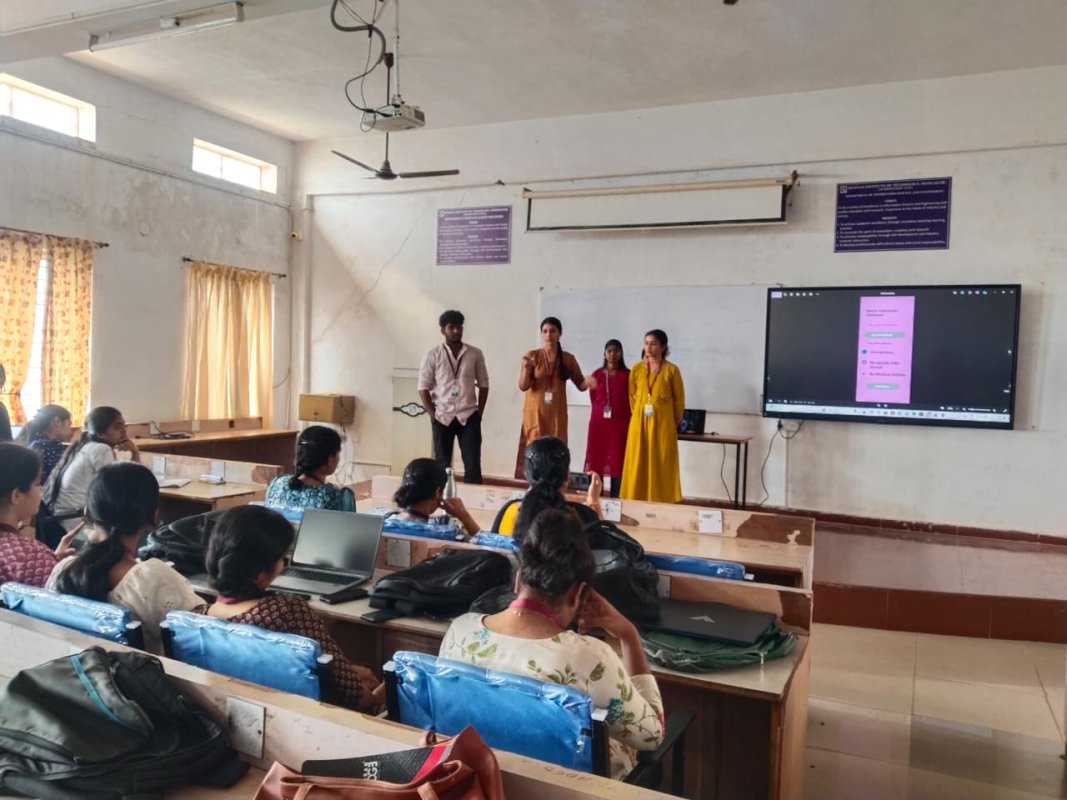
In the concluding phase, students delivered a Pitch, presenting their problem statements, proposed solutions, and prototype concepts. This activity enhanced their communication skills and confidence while encouraging concise and effective articulation of innovative ideas. Students were given the flexibility to choose problem statements within identified domains and collaboratively develop solution concepts or prototypes based on their design thinking outcomes.
The activity provided students with valuable exposure to the complete innovation lifecycle, from ideation to impact-oriented solution development. It reinforced the significance of empathy, creativity, collaboration, and iterative thinking in solving real-world problems. The hands-on nature of the program motivated students to move beyond theoretical knowledge and actively engage in innovation-driven problem solving.
Event Gallery (3 Images)